FAQ’s

Can you private label lamps? Absolutely, for a one-time printing die charge, we can print your name and lamp part number on any of our products. How are lamps packaged? Our inkjet bulbs are shipped in individual box with cotton glove and cleaning wipe. Lamps are thoroughly tested, ready to go to work. How long should my lamp last? UV lamp (bulb) life depends on many factors including number of starts, thermal operating conditions, power rating, additives and proper handling. Simply defined, it is the hours the lamp produces enough UV energy to properly cure the ink within the available exposure time. The initial 200 to 250 hours of operation (idol time plus active print time), the UV output is stable. Between 250 and 450 operation hours, output decreases, eventually resulting in insufficient UV curing energy. Some inkjet printers have the ability to change lamp power settings. Switching to medium or high power increases UV output, however heat is also increased. There may be a fine balance between acceptable UV output and heat generation. Another option is to maintain heat loading by slowing print speed while the UV lamp is at low power. This option is mostly available with standard mercury filled lamps. Some lamps are additive filled. They produce higher levels of UV; however, they do not last as long and normally cannot be run at low power. Each lamp startup reduces UV lamp life. Adjust printing schedule to keep lamp starts to a minimum. The fact that the lamp lights is not an indication of proper UV output. Most UV lamps will continue to operate long after their useful life has expired. Under normal conditions, the vast majority of TCS inkjet lamps will last 600 hours
How do I properly dispose of a lamp? Ultraviolet curing lamps contain mercury that is considered a hazardous waste. Do not discard these lamps in the trash. Disposal must be made in accordance with local, state and federal regulations. Contact your local hazardous waste management authority for proper recycling / disposal instructions. Part of our program as a UV lamp manufacturer, TCS Technologies encourages both recycling and reclaiming programs for all our lamps. Simply, package your UV lamps safely and send them to TCS Technologies. We will properly dispose of these materials at no charge.
How do I clean my UV lamp? Use a lint free cloth with Windex or Simple Green to clean. Do not waste your money on special UV lamp cleaners as they have dubious value! If solvents are permitted, use isopropyl alcohol. For extreme cases, use a mild abrasive such as Soft Scrub to clean the UV Lamp. Be sure to rinse any residue off the glass before reinstalling lamp. Always allow lamp to cool and disconnect all power prior to any cleaning. If your printer uses a clear quartz filter plate, use the same cleaning method to remove dust and ink mist. Remember to remove all fingerprints prior to resuming operation.
Can you supply a lamp even if we do not know the part number? TCS Technologies manufactures lamps for all makes of curing systems. We can match lamp specifications from an original operating sample. Normally this only takes a few days between receiving the lamp and providing a replacement. Your sample is not damaged and will be returned.
My coating will not cure. Confirm that the dryer reflectors are clean and free of distortion. Inspect mechanical shutters to confirm they are opening all the way. Be sure the lamp is free from spray powder, fingerprints, reflector material or other contaminants. Make sure UV lamp is up to full power. If reflected light output “looks” dim, chances are the lamp is overcooled. Always wear protective glasses when working with UV lamps. Never look directly at the UV lamp. Verify the number of operating hours that the lamp has run. If the lamp has over 400 hours of use, it may not generate enough ultraviolet energy to cure your application.
The ends of my lamps are discolored, what happened? Avoid excessive starts. Upon start up, the internal lamp pressure is low. During this time the lamp electrodes literally sputter off tungsten and this is deposited on the inside of the tube. Always start lamps in high power to shorten warm up time. Excessive starts cause premature darkening and drop in UV output.
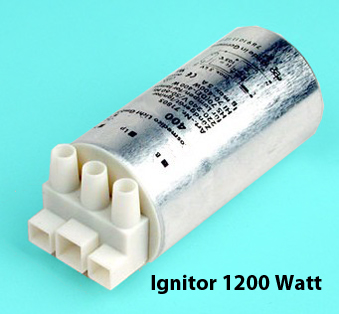
My lamp will not light. At TCS Technologies we thoroughly test each lamp for minimum 45 minutes. In the unlikely event you lamp does not start we suggest you double check the lamp connections. This is especially true when working with snap-in lamps such as HP CH231A and Color Span. This type lamp can appear to make contact even when not properly seated in lamp socket. Another issue appears in the AGFA Annapurna line of additive lamps. These lamps require special starting circuitry (Ignitor Control Gear). These devices are extremely line-voltage sensitive. At room temperature the lamp is filled in liquid form (mercury) along with an insulating gas argon or xenon. In order to start, the insulating gas must be made conductive in order to generate plasma. The ignitor carries this out by producing a series of high voltage pulses. Electrical charge carriers i.e. electrons are accelerated by the high voltage enabling them with sufficient energy to ionize atoms on impact which in turn generates more electrons. Think of the process as an avalanche eventually producing conductive hot plasma to maintain an arc. Problem is these ignitors age quickly and weaken over time. The result is insufficient voltage to “start the avalanche” and lamp will not light. Your existing lamp may still light but a new lamp which has higher initial starting criteria will not. At TCS Technologies we stock several replacement ignitors at a fraction of the OEM cost. |